
The term “informal trade” defines unofficial commercial exchanges from the vantage point of the colonial subject, unlike “contraband” which is labelled as such from the perspective of the colonizer or colonial elite. It turns illicit commerce on its head by seeking to understand the motivations, strategies, and outcomes of informal commercial interactions from a bottom-up perspective.
The Southern Caribbean was a vast transimperial region, where Dutch Curaçao functioned as the prime trade emporium from the 17th to the 18th century, siphoning valuable agricultural commodities such as cacao, tobacco, hides and mules from the Province of Venezuela and its neighboring Spanish provinces. Jewish Sephardi merchants from Curaçao were the prime movers of this informal economy and poor and middling white, Indigenous, free and enslaved black, and pardo cacao growers and smugglers were their suppliers. Informal trade was oftentimes the only means for these people to have a livelihood and obtain access to basic goods such as clothes, flour, tableware, and knives, that Spain failed to supply its colonies with on a regular basis.
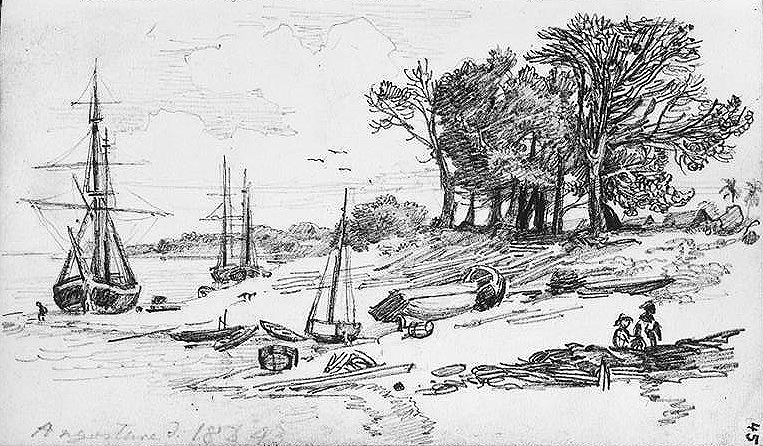
Vessels in Angostura, 1843, Ferdinand Konrad Bellermann, Staatliche Museen zu Berlin


