
Foodways refer to the comprehensive study of all activities, rules, and meanings surrounding the preparation, serving, and consumption of food. This concept encompasses not only what people ate, but also how food was sourced, processed, cooked, and shared, as well as the material things — such as ceramics and tools — associated with these practices. In IslandLives we investigate foodways through direct evidence like animal and plant remains and residue analysis, indirect evidence such as the reconstruction of storage, cooking, and serving vessels, and spatial organization of food-related activities.
The study of foodways is highly relevant to understanding social and cultural life because food practices are deeply intertwined with materiality, identity, status, power, and community. Foodways reveal how social distinctions — such as class, ethnicity, gender, and status — are constructed and negotiated through everyday practices like cooking, feasting, and sharing meals. For example, the choice of ingredients or cooking techniques may signal group identity or adaptation to new social realities, such as those in intercultural colonial settings. Foodways also reflect broader cultural values, ritual practices, and responses to issues like food insecurity. By analyzing the material and immaterial aspects of food, historical archaeologists gain insight into the ways that food shapes, and is shaped by, the social and cultural fabric of past societies.
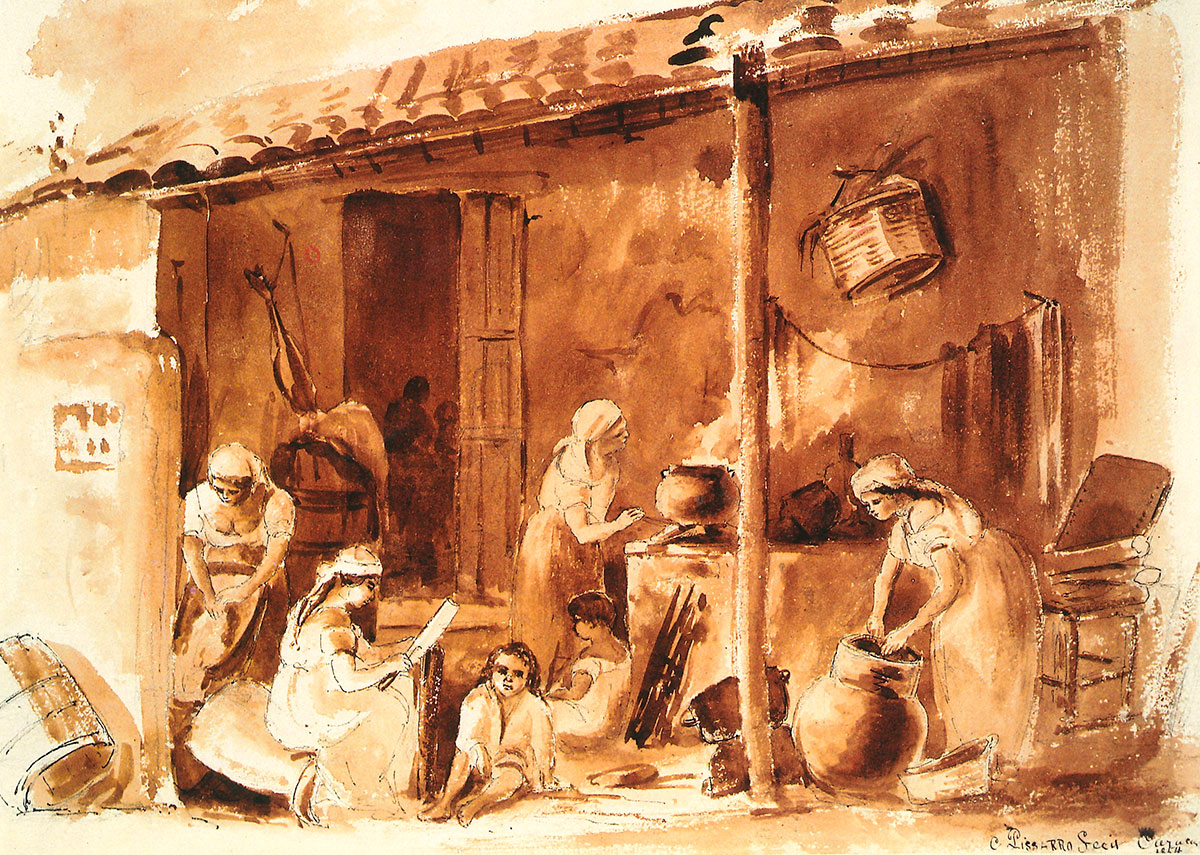
Open-air kitchen in Venezuela, 1854, by Camille Pissarro


