
Modernity is a complex and much-debated phenomenon with multiple meanings. In this project, the focus lies on the forms of modernity that grew out of European imperialism and capitalism, together with their global reach and consumerist drives, underpinned by Enlightenment ideals of individualism and progress. This “hard” modernity was Eurocentric, colonialist, patriarchal, and racist, silencing or erasing the histories of those outside its frame and deepening the divide between West and non-West. In response, critical movements — anticolonial, postcolonial, and decolonial — have sought to expose these exclusions. Within this broader critique, anthropologists have emphasized the idea of multiple or alternative modernities, drawing attention to local, vernacular, and subaltern experiences that developed in the shadows of European dominance.
This project instead places emphasis on what might be called a “soft” and plural modernity, one shaped by human agency and the productive frictions that arise when people engage with dominant ideologies and institutions across cultural, social, and religious differences. These alternative modernities are not mere reflections of European models but distinct local articulations of materiality, culture, and power. Despite the Caribbean’s central role in the making of modernity, little focused attention has been paid to its alternatives and contradictions. Building on earlier small-scale archaeological work, IslandLives expands the scope. By combining close analysis of everyday life at multiple sites on multiple islands, IslandLives seeks to uncover how alternative modernities in the Southern Caribbean were formed, how they operated, and what impacts they carried locally and globally over more than two centuries.
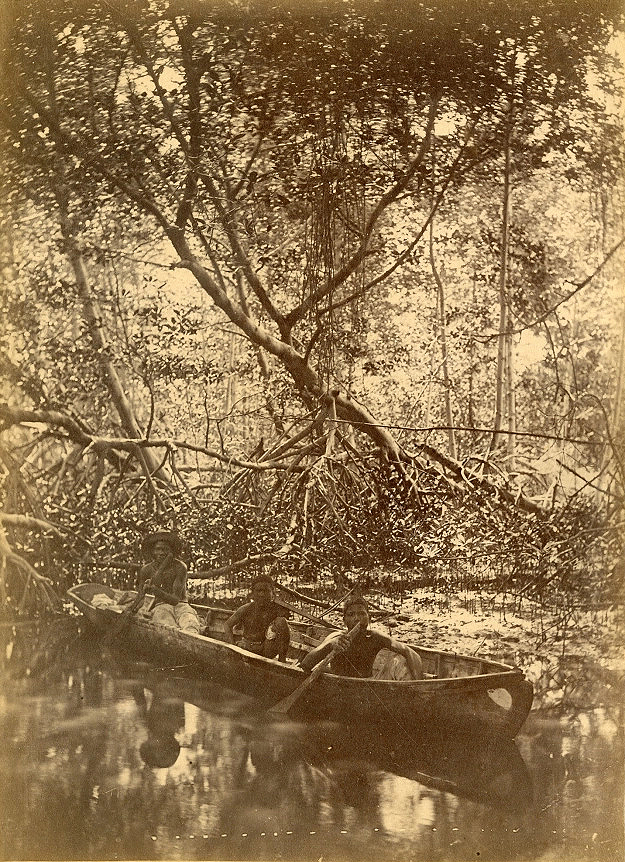
Indigenous Caribs in a canoe in Guanta, Venezuela, 1890s


