
A campsite is a place with temporary accommodation of tents, huts, or shelters, typically inhabited by highly mobile people or those undertaking activities of a transient or seasonal nature.[1] Campsites are places of impermanence. Campsites are, therefore, oftentimes uniquely liminal places that are unstructured (in the social sense) and unhomelike. Social structures typical in the household can be temporarily suspended or altered in such impermanent settings, at times leading to playful, or even socially subversive and transformative behaviors, for example, eighteenth-century Anglo-American sailors drinking heady rum punch and sipping elegant green tea at the campsite by the saltpan of the island of La Tortuga.[2]
For IslandLives, campsites are especially interesting to study because of the un-everyday-like activities that occurred there — whether repackaging bales of European textiles to be sold in Tierra Firme, or stashing sacks of smuggled cacao — result in often atypical assemblages of practice that we can reassemble and contrast with those from households. Campsites, therefore, provide us with a rich foil for households and enable us to better understand the workings of alternative modernities among the various peoples who lived on the ABC islands in the past.
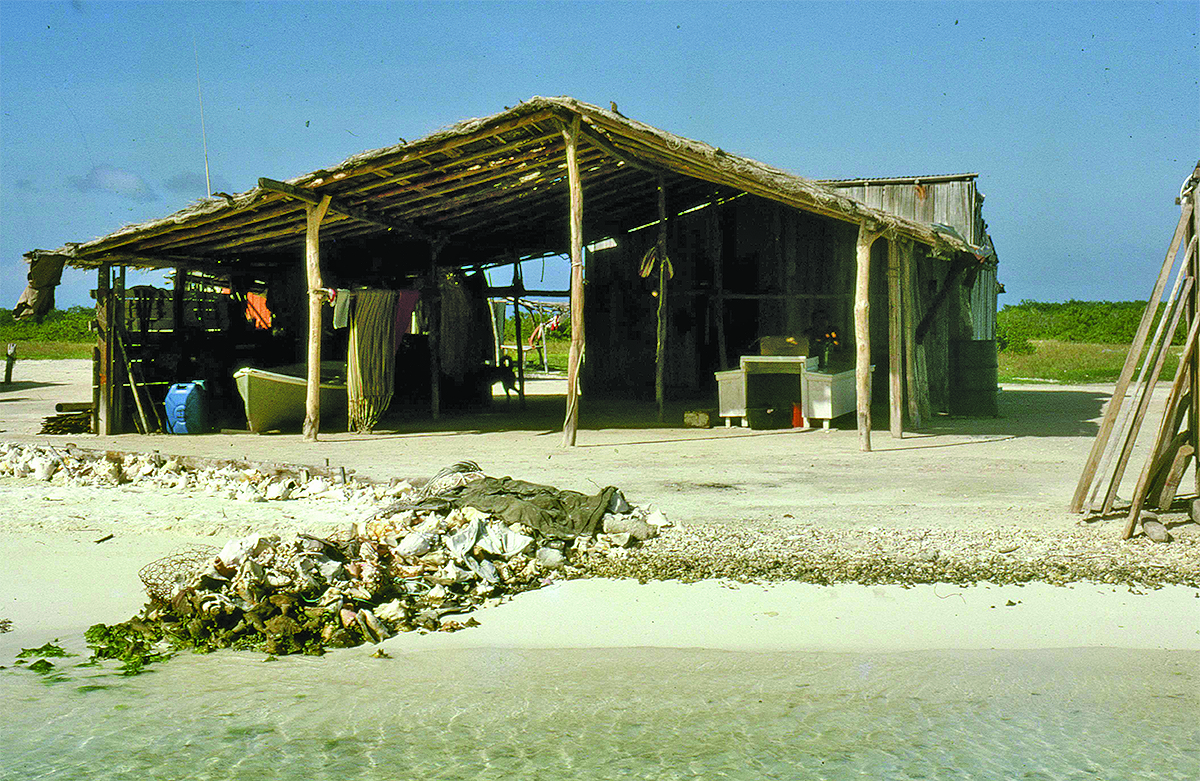
Rancheria on Isla Agustín, Los Roques Archipelago, Venezuela, in the 1980s, photo by Andrzej Antczak
[1] Antczak, Konrad A. (2026). Islands of Impermanence: Historical Archaeology of Campsites in the Venezuelan Caribbean, 1530–1840. In New Directions in Caribbean Archaeology, edited by John F. Cherry and Myriam A. W. Rothenberg, pp. 249–277. Sidestone Press, Leiden.
[2] Antczak, Konrad A. (2024). Salt and Contraband: Historical Archaeology of Foreign Seafarers in The Venezuelan Caribbean, 1638–1800”. In Venezuelan Historical Archaeology: Current Perspectives on Contact, Colonialism, and Independence, edited by Konrad A. Antczak, pp. 315–356. Sidestone Press, Leiden.


