
Households are the places where people’s everyday lives are anchored. Far from being humdrum and boring, households are places where the practices and beliefs of modernity were imposed, resisted, reinterpreted, or reshaped, making them ideal units for understanding the formation and operation of alternative modernities in everyday life. At this intimate scale of the household, the friction between public and private spheres could rearticulate the relations people had with things, with their culture, and with the dominant power structures of their society. Households were also often the places where the global and local intertwined, with transformative change occasionally flowing not only from metropolis to household but also from household back to metropolis.
By comparing household practices across the islands, both across time and between communities, IslandLives explores how race and ethnicity, religion, class, and gender were expressed and negotiated at each site. These intersecting identities shaped daily practices such as foodways, dwelling, religious observance, acquisition, and gendered activities, among others. By studying both urban and rural households beyond the archetypal cash-crop plantation, as well as campsites that were oftentimes the opposite of households, this project highlights how Caribbean peoples navigated modernity on their own terms and how their everyday alternatives influenced Dutch and European modernity itself.
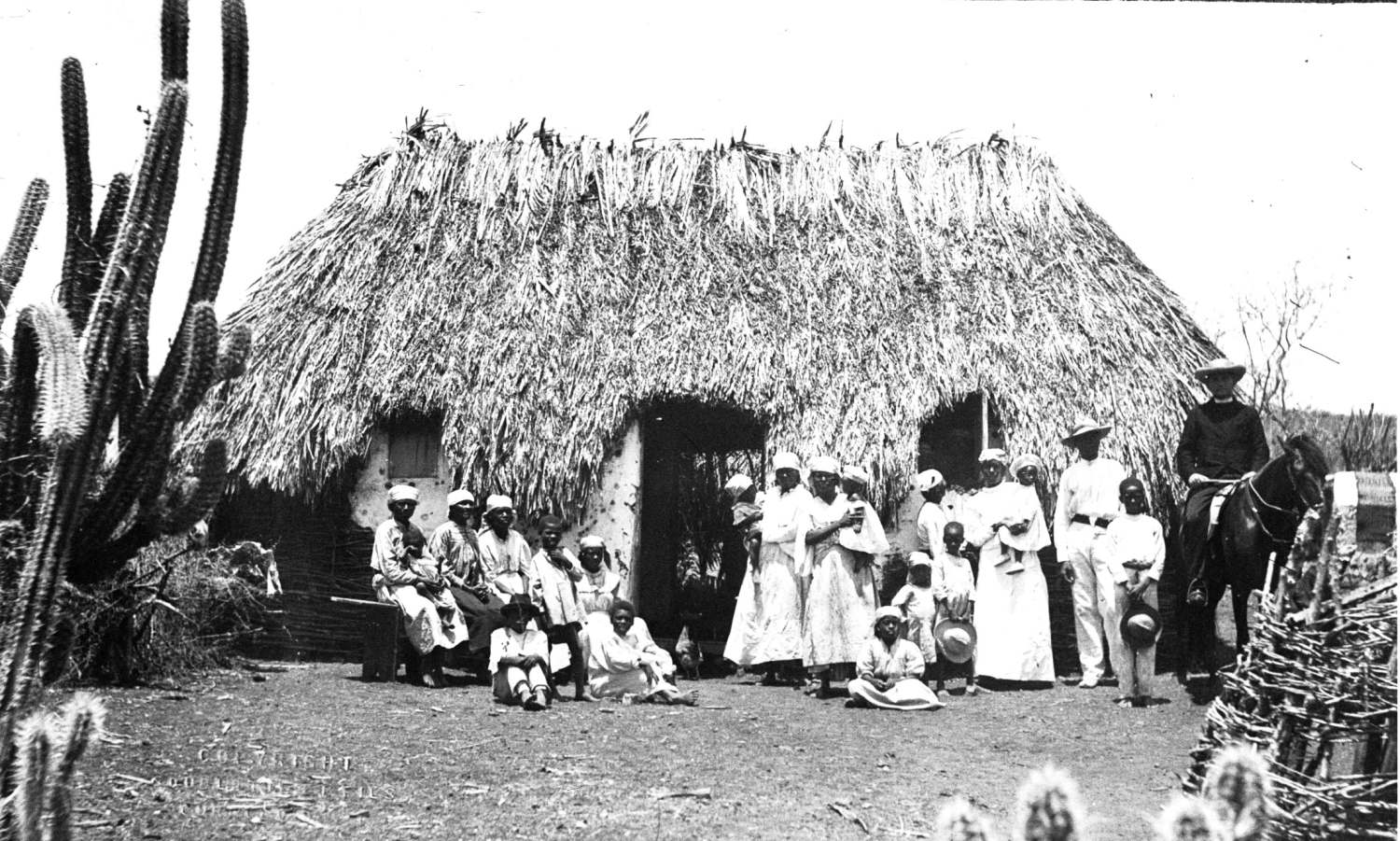
Group portrait of villagers in front of their house, 1905-1910, Nationaal Museum van Wereldculturen


