
Archaeobotany

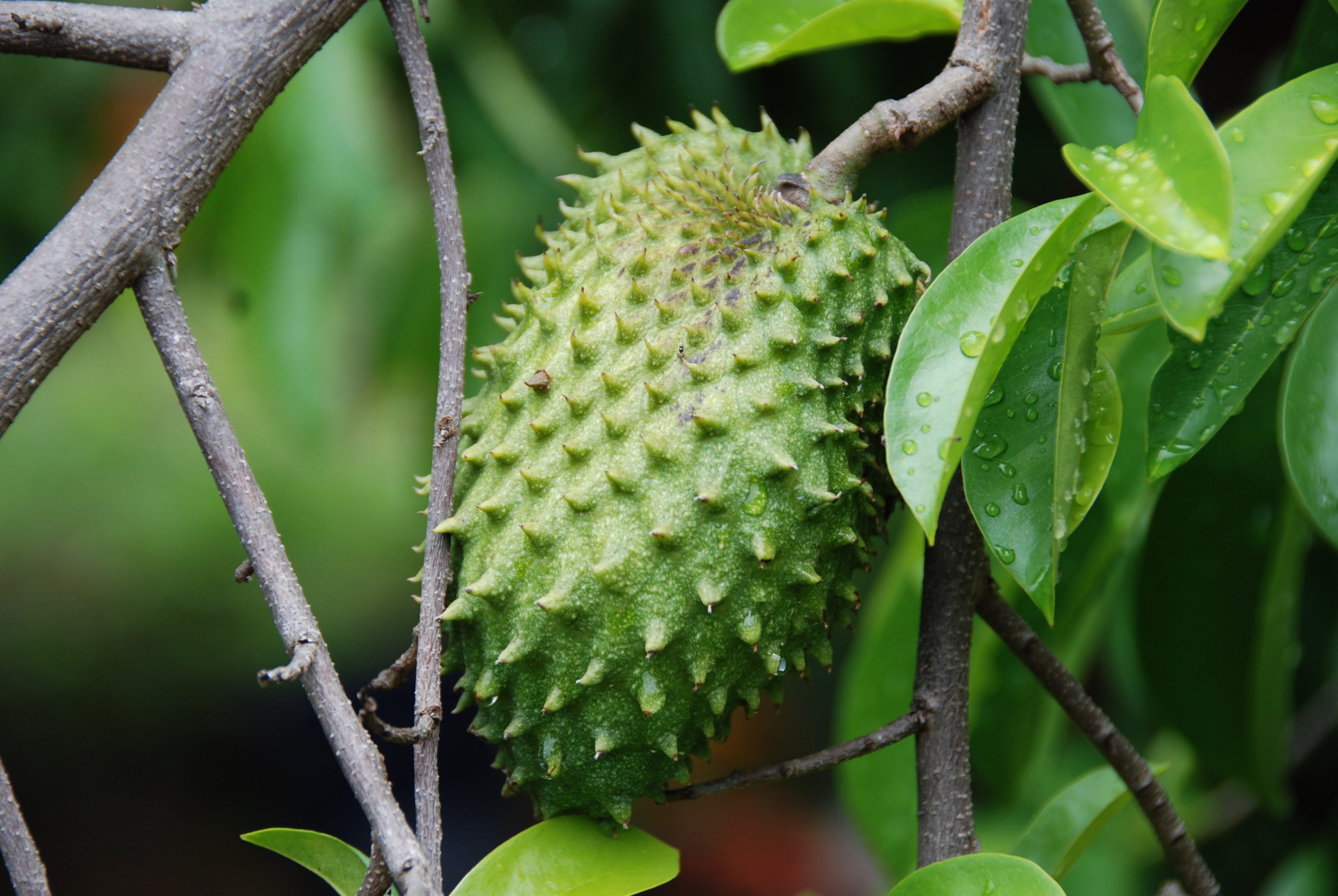
Guanabana (Annona muricata) fruit hanging on tree, Los Testigos Archipelago, Venezuela.
This research line seeks to understand how people and plants were entangled in everyday life at the sites we excavate. Botanical recovery focuses on macrobotanical and microbotanical remains. When obtained through flotation, macrobotanical remains such as charcoal, seeds, nutshells, and plant tissues enables us to determine the genus or species of some of the plants used for fuel, and identify the fruits, vegetables, nuts, cereals, and pulses that might have been consumed at each site, what was cultivated in the surrounding area, what plants consumed were native, and which ones might have been imported from Tierra Firme or other parts of the world.
Depending on the preservation at each site, microbotanical remains analysed include pollen, starch grains, and phytoliths. These are extracted from excavated cooking and storage vessels, and food processing tools such as grinders, as well as soil samples from the excavated sites, and help us determine what activities occurred in what areas. Analyses of plant amino acids using cutting-edge shotgun proteomics are also used to further refine the findings from the macro- and microbotanical studies at each site, to better understand what vessels/tools were used for cooking/processing what foodstuffs, and to approximate the ingredients used in island foodways in heretofore impossible detail.
This research marks the first time that a full array of archaeobotanical and proteomic analyses is employed in a historical archaeological project. We obtain detailed botanical data that speaks to the past social relevance and use of plant resources on the ABC islands. This research line, together with everyday animal entanglements, furthermore provides vital data for reconstructing the assemblages of foodways at each of the excavated sites, determining how these varied according to the intersections of race/ethnicity, religion, class, and gender of their occupants and, ultimately, identifying changes and/or continuities in foodways through the 229 years studied by the project.
Responsible of the research line
Carlos G. Santiago Marrero
Postdoctoral Researcher
carlos.santiago@upf.edu


