
Zooarchaeology

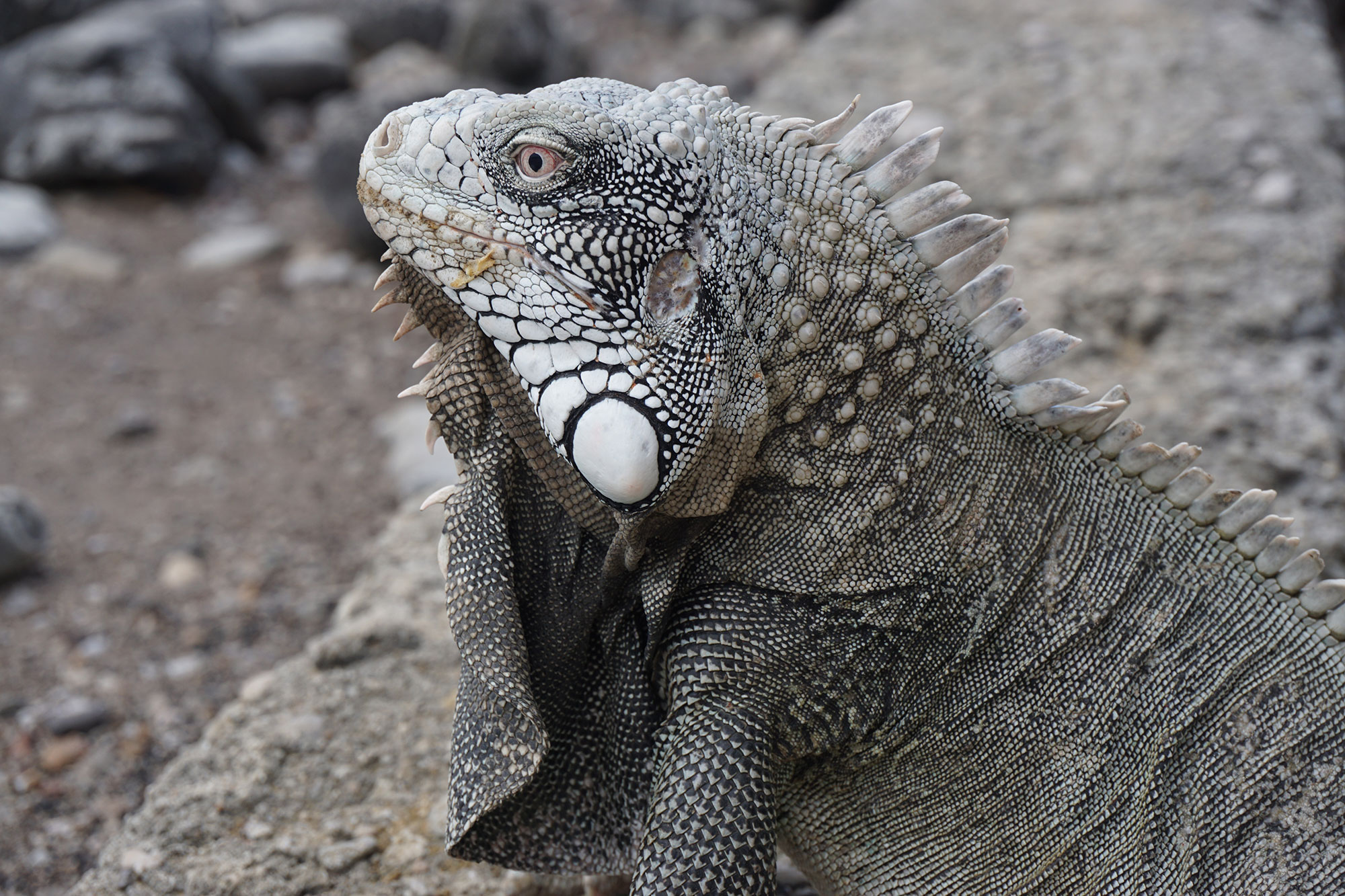
Green iguana (Iguana iguana) (“Yuana“ in Papiamentu) on the northern coast of Bonaire.
Zooarchaeological analyses are used to reconstruct the animal-based aspects of foodways at the sites excavated on the ABC islands. We undertake meticulous analysis of the animal remains, including (where possible) minimum number of individual (MNI) counts, skeletal-part identification and quantification, species- or genus-level taxonomic identification, and analysis of butchery marks. We use ZooMS collagen fingerprinting to provide species-level identification of difficult samples and help establish identification protocols. We also use cutting-edge shotgun proteomics to analyse animal amino acids in cooking vessels to obtain a more detailed picture of animal derived products used in cooking in the past.
Such precise and careful taxonomic identification and MNIs provide valuable information on animal husbandry, hunting, fishing techniques, seasonality, and marine resource procurement by different social groups on the islands. Furthermore, analysis of butchery patterns and skeletal-parts and their quantities has the potential to reveal much about everyday foodways, including the quality of cuts and their culinary use.
We obtain detailed faunal data that speaks to the past human-animal entanglements on the ABC islands. This research line, together with everyday plant stories, therefore provides vital data for reconstructing the assemblages of foodways at each of the excavated sites, determining how these varied according to the intersections of race/ethnicity, religion, class, and gender of their occupants and, ultimately, identifying changes and/or continuities in foodways through the 229 years studied by the project.


